
From Storage Box to Statement Wall: Littelfuse’s Space Race Legacy
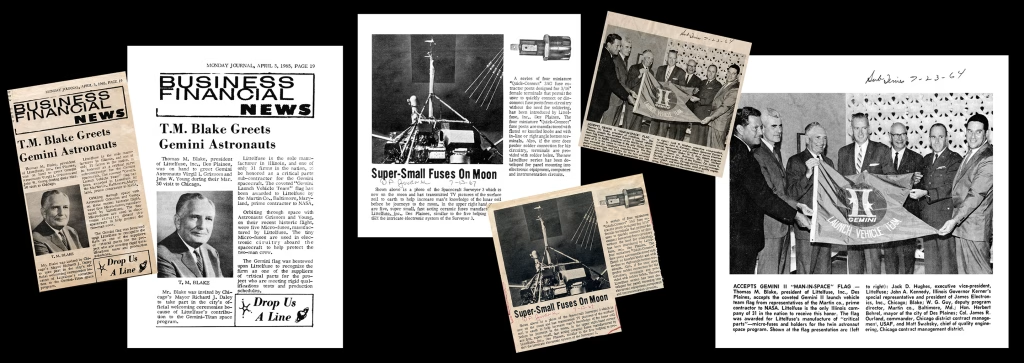
This project started with a collection we’re probably all familiar with: old newspaper clippings and photographs, buried in a storage box. Some were yellowing, others were showing their age, and Littelfuse knew that the history captured on those pages needed to be preserved. What no one knew yet was that buried within that archive was a remarkable chapter of Space Race history that would eventually become the foundation for a modern corporate history wall.
PRESERVING THE STORY BEFORE TELLING IT
Littelfuse originally came to us with a straightforward preservation request. They had dozens of historical photographs, newspaper articles, and company documents that had accumulated over the years, and the physical copies were beginning to deteriorate.
Our first job was simply to save what was there.
We scanned the originals in high-resolution, then digitally cleaned up years of discoloration and damage and created proofs so they had an organized digital archive they could keep and use going forward.
As we worked through those materials, one interesting chapter kept resurfacing: Littelfuse’s involvement in the American space program.
In 1965, Littelfuse was recognized for manufacturing micro-fuses used in critical electronic circuitry aboard the Gemini spacecraft. Newspaper coverage from the time reported that the company was one of only 31 firms in the country honored as a critical-parts subcontractor for the program. Littelfuse president Thomas M. Blake even greeted Gemini astronauts Virgil I. “Gus” Grissom and John W. Young during their visit to Chicago.
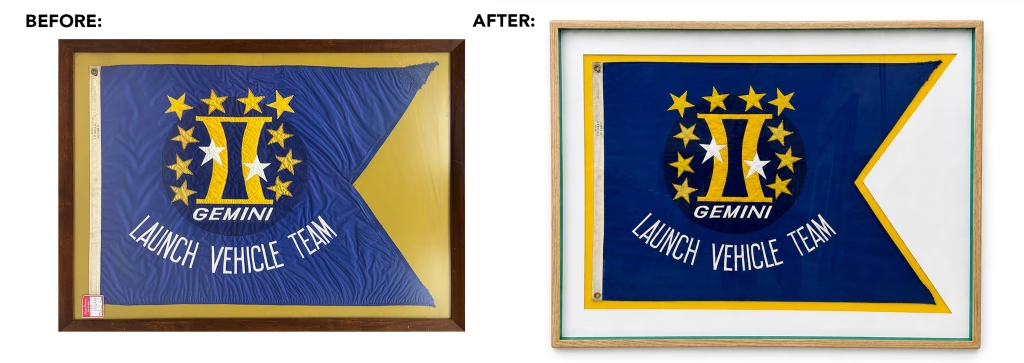
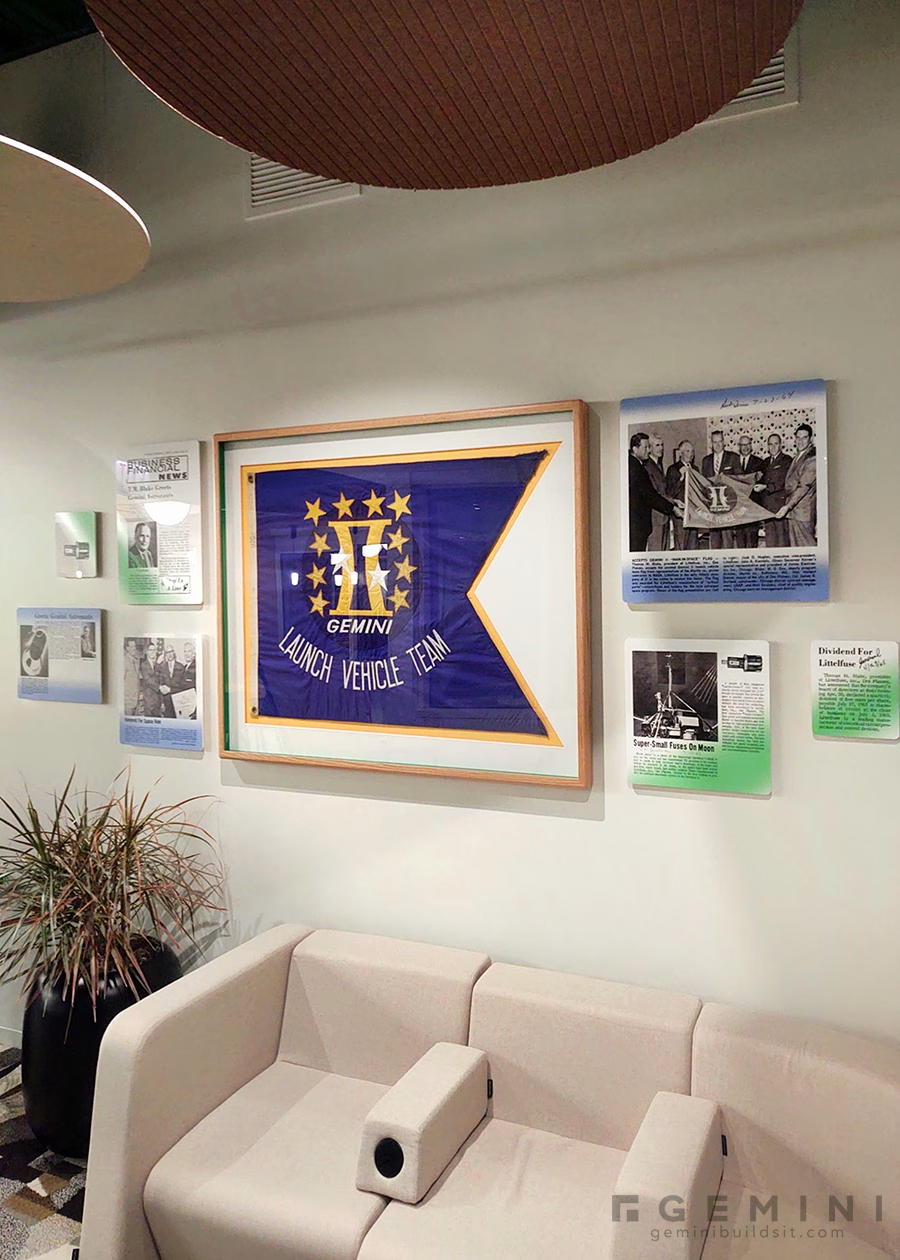
And they still had something remarkable from that era: an original Gemini Launch Vehicle Team flag.
Now, we had a focal point.
Rethinking the Typical Corporate History Wall
Littelfuse had a lounge where the flag and its surrounding history could live, but we didn’t want the finished installation to feel like a conventional gallery of framed newspaper clippings.
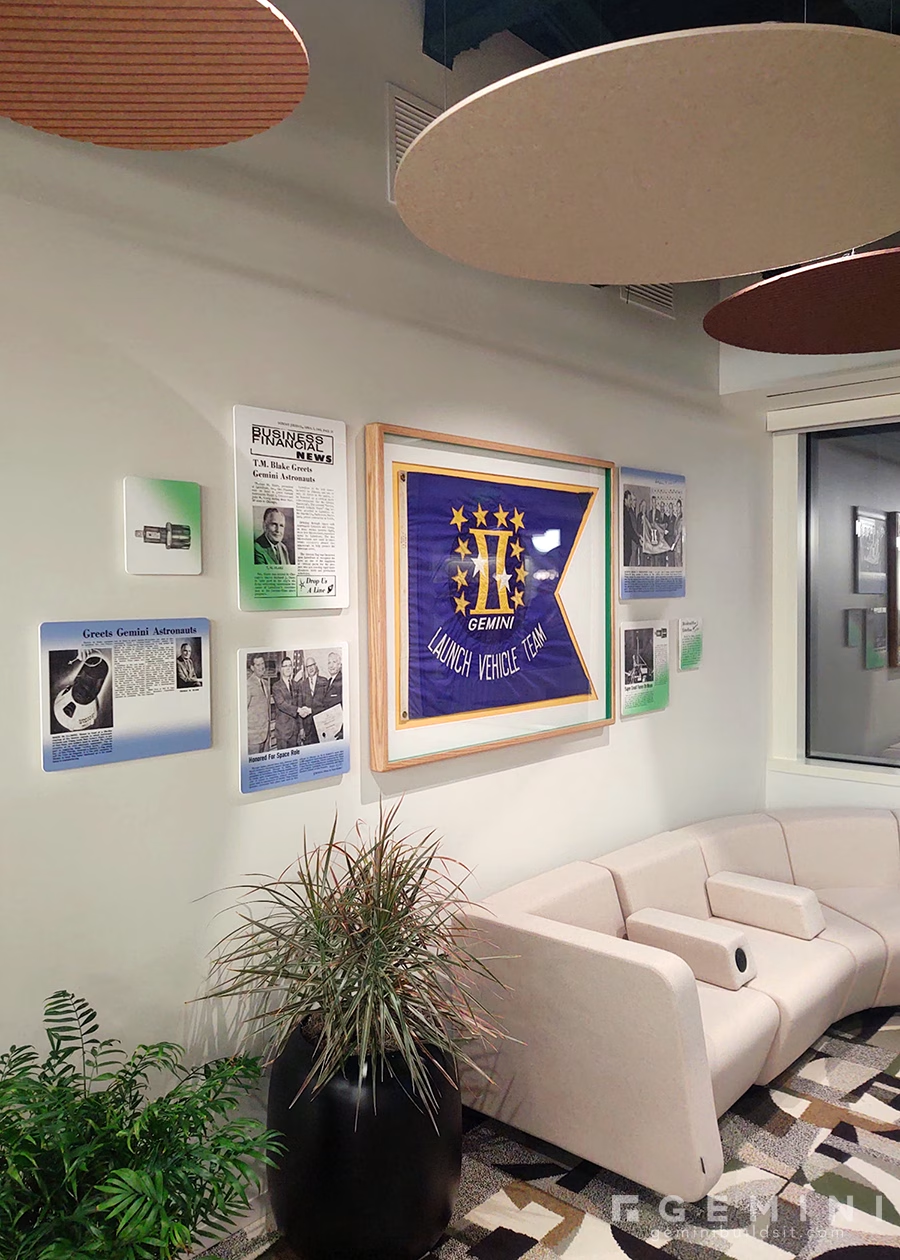
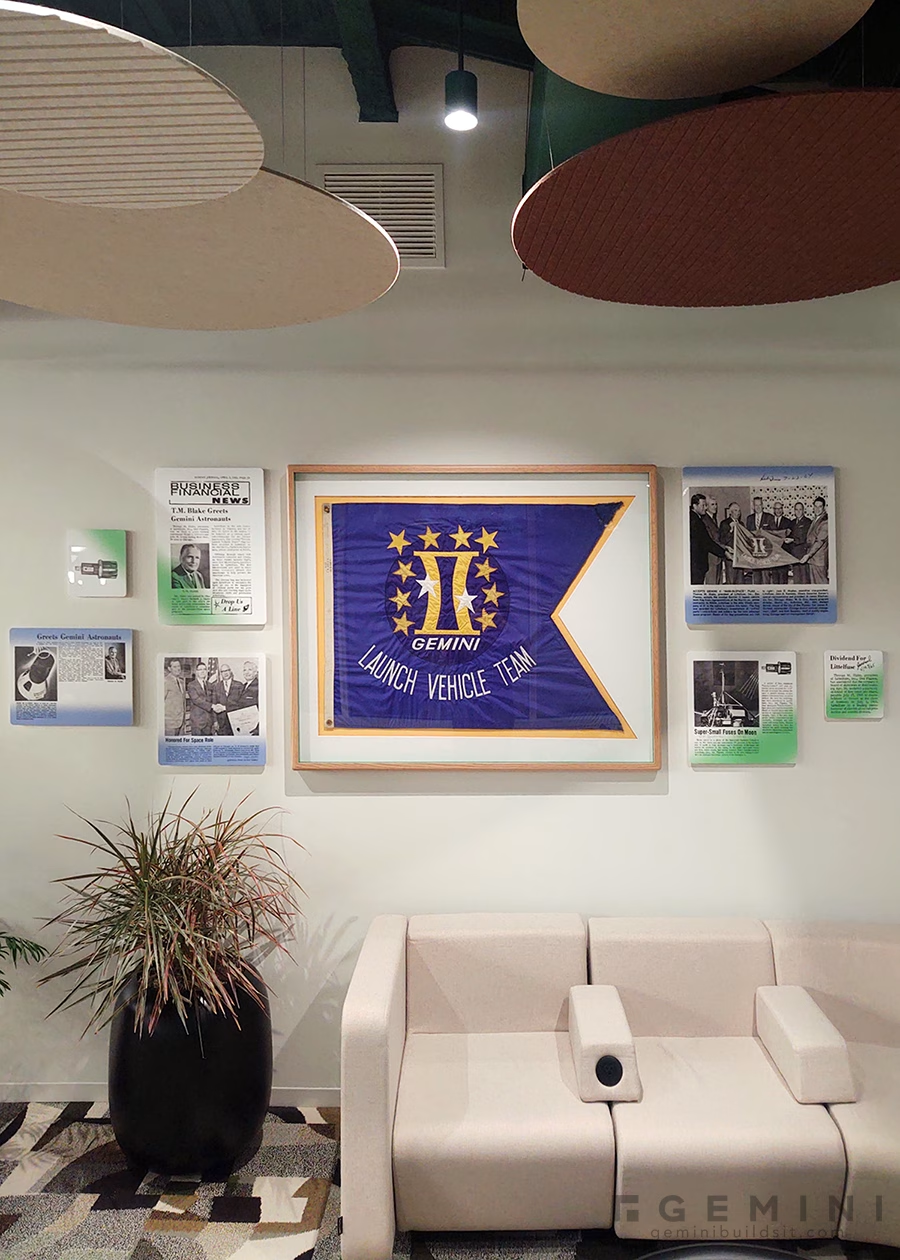
Instead, we pulled the articles that helped tell the story surrounding the flag and reworked them as contemporary graphic pieces. Each restored article was printed directly onto 1/8-inch white acrylic, with washes of their brand colors incorporated into the designs. The color breaks up the white space, connects decades-old source material to the company today, and gives each piece its own presence without competing with the flag.
Cleats mounted to the backs of the acrylic panels eliminate visible hanging hardware, allowing the articles to appear as though they’re floating off the wall.
The result still feels historical, just not stuck in the past.
Designing Around the Flag—and the Room
The flag became the center of the installation, which meant its new framing needed to carry more visual weight while still letting the flag itself lead.
We designed a custom oak hardwood shadowbox deep enough to recess the flag for added dimension, using archival framing and a custom-cut mat that follows its distinctive shape. Inside, the shadowbox is lined in Littelfuse’s brand green, creating a subtle connection between the historic blue-and-gold flag and the company’s current visual identity.
But there was one smaller detail that brought the entire installation into the room…
The lounge is filled with curves, from the furniture below the display to the large circular forms suspended overhead. Rather than introducing a wall full of hard rectangular edges, we rounded the corners of both the oak frame and the individual acrylic panels. It’s a subtle design decision, but one that makes the history feel like it belongs to the architecture around it.
Our team handled the final installation as well, bringing the flag and floating acrylic pieces together into one cohesive gallery.
MORE THAN JUST AN ARCHIVE
Today, the Gemini Launch Vehicle Team flag hangs at the center of the lounge at Littelfuse’s Rosemont, IL headquarters, surrounded by the newspaper stories that give it context within the company’s history and the Space Race itself.
The original clippings can remain safely preserved, while their restored reproductions give employees and visitors a chance to stop, look closer, and discover a chapter of Littelfuse history that might otherwise have stayed tucked away in storage.
For companies with decades of history, some of the best stories are often already there, stored away into boxes, file cabinets, old photographs, and documents that no one quite knows what to do with. Littelfuse started by simply preserving what they had. Once the right pieces came together, those materials became something more: a story that now has a permanent place in the company’s everyday space.
